
For the parent who knows something is off, but can’t quite name it

Introduction
If you’re a parent reading this at midnight, phone in hand, heart racing a little, welcome.
Most parents who find this article aren’t casually browsing. They’re searching for answers about the hidden signs of autism in girls, because something about their child doesn’t quite add up.
Your daughter is bright. Sensitive. Observant. Maybe even doing “fine” on paper.
And yet…
You see the exhaustion after school.
The tears over things others brush off.
The way she tries so hard to fit in.
When most people think of autism, they picture signs commonly seen in boys, like avoiding eye contact, lining up toys, and exhibiting obvious repetitive behaviors. But recent research is telling us something many parents have known in their gut for years:
👉 Autism often looks very different in girls
👉 Many girls are missed, misunderstood, or diagnosed much later
👉 And many parents are quietly told, “You’re worrying too much.”
If you’ve ever thought, “Something feels different, but no one is taking me seriously,” please know this: you are not imagining it, and you are not alone.
Why Are So Many Girls Missed or Diagnosed Late?
Many of the hidden signs of autism in girls aren’t disruptive or obvious – they’re quiet, internal, and easy to overlook.
1. Girls learn to “mask” their challenges
Many autistic girls don’t stand out; they blend in.
They learn early that fitting in matters, so they:
- Memorize social rules
- Force eye contact even when it feels painful
- Smile when they’re overwhelmed
- Stay quiet rather than risk getting it wrong
- Copy a friend’s personality to survive socially
To teachers and relatives, she may look “well-adjusted.”
But you might see the cost, how drained she is afterward.
Researchers call this camouflaging, and while it helps girls cope on the surface, it often hides their struggles from adults. (Isaksson & Ambrosini, 2023)
If you’ve ever thought, “Why does she fall apart only at home?”-this is often why.
2. Autism research has historically focused on boys
Most diagnostic tools were built around how boys show autism.
So when girls don’t match those checklists, concerns get dismissed.
A 2024 review found that diagnostic systems often miss girls unless their traits are very pronounced. (Bourne et al., 2024)
This means many parents leave appointments feeling confused, unheard, or doubting themselves, despite knowing their child best.
3. Girls often struggle internally rather than externally
Instead of obvious meltdowns at school, girls may:
- Worry constantly but silently
- Copy classmates to stay unnoticed
- Push through sensory overload
- Hold everything together until they’re safe at home
Teachers may say, “She’s quiet and compliant.”
But you may see the emotional crash that follows.
These “quiet signs” are easy to miss, but they are real.
4. Many girls are first labeled as “anxious.”
It’s very common for girls to receive diagnoses like:
- Anxiety
- Depression
- Social anxiety
- ADHD
Years before autism is even considered. (Rutherford et al., 2023)
If your child has collected labels but still doesn’t feel fully understood, that disconnect matters.
Signs of Autism in Girls: What Parents Often Notice First
Parents are usually the first to sense something subtle. Here are patterns many parents recognize not because they’re dramatic, but because they’re consistent.

1. Social differences that don’t look like “classic autism.”
Your daughter may:
- Want friends deeply, but struggle to keep them
- Attach strongly to one friend and follow them closely
- Prefer adults or younger children
- Feel lost in group conversations
- Get overwhelmed by unspoken social rules
- Be “included,” yet never feel she truly belongs
Research shows girls often appear socially capable, but they’re working far harder beneath the surface. (Isaksson & Ambrosini, 2023)

2. Special interests that seem “typical.”
Unlike stereotypical portrayals, girls’ interests may look socially acceptable:
- Animals
- Books or fantasy worlds
- Art or writing
- A celebrity or fictional character
What’s often missed is the intensity-how regulating, consuming, or emotionally necessary these interests are. (Yeşil et al., 2025)

3. Sensory sensitivities she may not complain about
She might struggle with:
- Clothing tags or seams
- Loud or sudden noises
- Bright lights
- Strong smells
- Certain food textures
But instead of protesting, she avoids, tolerates, or internalizes the distress, making it easy for others to overlook.
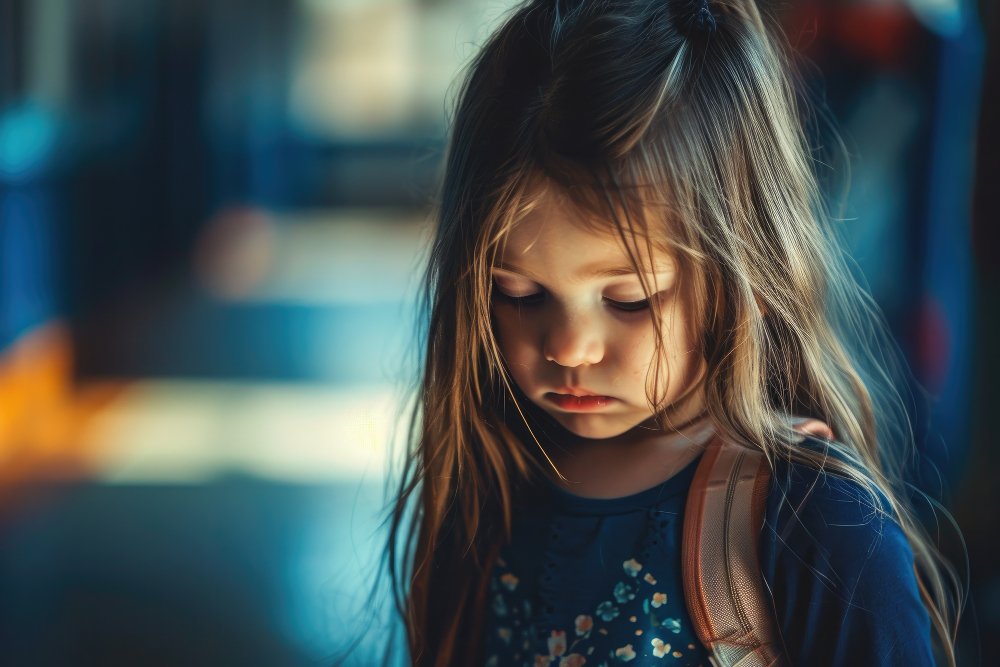
4. Emotional overload after school
Many parents describe this exact rhythm:
- She manages all day
- Comes home
- Then collapses, emotionally or physically
Meltdowns, tears, irritability, or shutdowns aren’t signs of misbehavior.
They’re signs of masking fatigue, which is common in autistic girls. (Wood-Downie et al., 2022)

5. Communication that sounds “advanced.”
Autistic girls may:
- Speak very formally or maturely
- Use impressive vocabulary
- Struggle with conversational back-and-forth
- Miss sarcasm or jokes
- Take language very literally
Because they sound articulate, their deeper communication challenges are often overlooked. (Mete Yeşil et al., 2025)
Why Early Recognition Matters-Emotionally and Practically
Girls who grow up undiagnosed often:
- Feel “wrong” without knowing why
- Internalize failure
- Develop anxiety or depression
- Experience burnout in adolescence
Understanding doesn’t limit a child; it liberates them.
With the right lens, girls can:
- Access accommodations
- Learn self-advocacy
- Regulate emotions and sensory needs
- Connect with others like them
- Feel seen instead of broken
What Parents Can Do Gently, One Step at a Time
✔️ Trust your observations
You know your child in ways no checklist ever will.
✔️ Document patterns
Write down sensory triggers, meltdowns, exhaustion, and social challenges.
✔️ Seek informed evaluations
Look for professionals who understand autism in girls.
✔️ Support without pressure
Quiet time, sensory breaks, and recovery matter.
✔️ Talk about masking
Ask gently, “Did you feel like you had to pretend today?”
✔️ Listen to autistic women and girls
Their stories often sound like what parents have been noticing all along, and can be deeply validating.
A final note to parents
If you’re here because you’re worried, exhausted, or second-guessing yourself, pause for a moment.
Your concern doesn’t mean something is “wrong.”
It means you’re paying attention.
And sometimes, attention is the first step toward understanding, support, and relief for both you and your child.
For more articles and upcoming resources, visit our homepage https://neuronesthub.com/ at NeuroNestHub
References
Bourne, M., McCleod, M., & Malaia, E. (2024). Neurocomputational phenotypes in female and male autistic individuals. arXiv Preprint. https://arxiv.org/abs/2405.04248
Isaksson, J., & Ambrosini, F. (2023). Sex Differences in the Temporal Dynamics of Autistic Children’s Natural Conversations. Molecular Autism, 14(1), Article 13.
Mete Yeşil, A., İskender, H. C., Çam, E. C., Ömercioğlu, E., Kılınç, Ş., & Özmert, E. N. (2025). Recognizing the overlooked: Rethinking autism spectrum disorder symptom presentation in girls. The Turkish Journal of Pediatrics, 67(4), 514–521.
Rutherford, L., et al. (2023). Sex differences in age of childhood autism diagnosis and the impact of co-occurring conditions. Journal of Autism and Developmental Disorders.
Wood-Downie, H., et al. (2022). The early childhood signs of autism in females: A systematic review. Review Journal of Autism and Developmental Disorders, 11, 249–264.