
Introduction
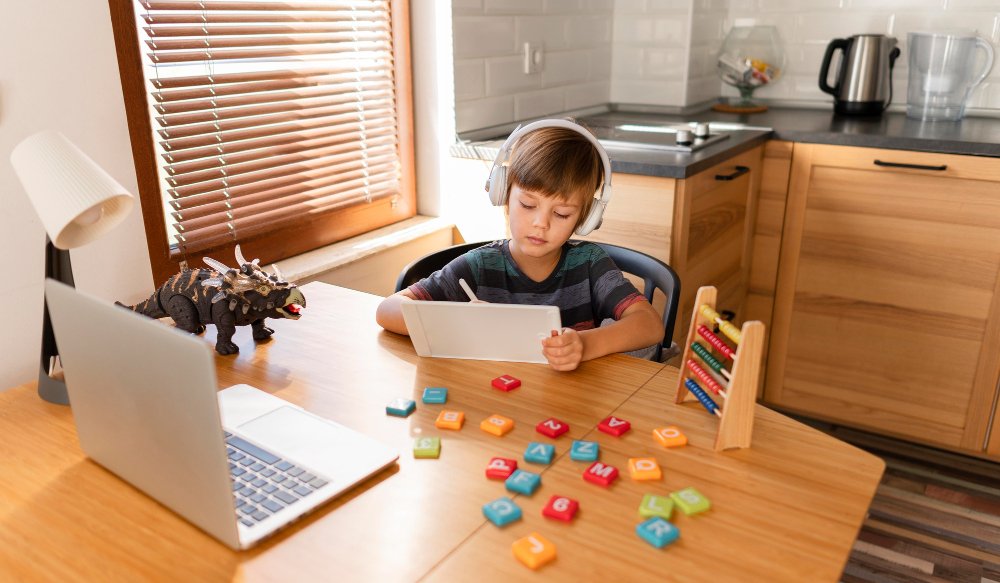
ADHD and Autism-Friendly Study Spaces can transform daily homework battles into calmer, more structured routines. For many families, homework becomes overwhelming due to distraction, sensory overload, executive-function challenges, and anxiety.
Creating intentional ADHD and Autism-Friendly Study Spaces at home helps reduce stress, improve focus, and support independence. The good news? Small, thoughtful changes to the study environment and daily routine can make a dramatic difference.
Why ADHD and Autism-Friendly Study Spaces Matter
Well-designed ADHD and Autism-Friendly Study Spaces support how neurodivergent brains process information.
Children with ADHD and those with autism spectrum disorder (ASD) process sensory input, transitions, and executive tasks differently. Research shows that tailoring the physical and social environment, from lighting and sound to visual supports and predictable routines, helps:
- Reduce anxiety
- Improve task initiation
- Increase homework completion
- Strengthen parent-child cooperation
When the environment supports the child, homework feels manageable, not impossible.
Below are research-backed, practical strategies to help you design effective ADHD and Autism-Friendly Study Spaces that truly support neurodivergent children.
1) Choose a Purpose-Built Homework Zone (One Space, One Job)
A dedicated study area helps the brain associate that space with focus and productivity.
Research on Universal Design for Learning (UDL) indicates that structured learning environments can improve attention and academic skills in children with ADHD (Frolli et al., 2023).
Quick Setup Checklist:
- Small desk or table (not the bed)
- Comfortable chair at eye level
- Minimal visual clutter
- Supplies within reach
Consistency builds mental cues for focus.
2) Control Sensory Inputs: Light, Sound & Touch
Sensory regulation is central to successful ADHD and Autism-Friendly Study Spaces.
Many autistic children experience sensory modulation differences. Children with ADHD can also be easily distracted by environmental stimuli.
Optimise the Environment:
- Use natural light + soft desk lamp
- Reduce background noise (white noise or noise-reduction headphones)
- Keep a small sensory toolkit nearby
Sensory Box Ideas:
- Stress ball
- Therapy putty
- Textured mat
- Safe chewable necklace
Studies on adaptive sensory environments show measurable reductions in anxiety when spaces match a child’s sensory profile.
3) Reduce Cognitive Load with Visual Supports
Executive-function differences make multi-step homework overwhelming.
Visual supports reduce working memory demands and increase independence.
Effective Tools:
- 3-step task cards
- Homework checklist
- Color-coded folders
- 20-minute visual timer
Digital homework support programs combining structure, goal setting, and rewards show improved homework completion and reduced family conflict.
4) Build Predictable Homework Routines (Structure, Not Rigidity)
Predictability reduces resistance.
Consistent homework windows with scheduled breaks improve participation and reduce stress.
Sample Homework Routine:
- 10 min snack + organize
- 20–25 min focused work
- 5–10 min movement break
- 10–20 min focused work
- Reward + pack up
Routine builds habit loops for ADHD and reduces uncertainty for autistic children.
5) Use Movement & Sensory Breaks Strategically
Short, planned movement breaks improve focus and reduce frustration.
Try:
- Wall pushes
- Jumping jacks
- Mini trampoline
- Stretching routine
Active breaks are consistently highlighted in intervention studies as effective for improving on-task behaviour.
6) Personalize the Study Space
Ownership increases motivation.
Let your child:
- Choose folder colours
- Pick a lamp
- Select one sensory tool
- Decorate a small section
Neurodiversity-aware design research shows personalization improves engagement and emotional comfort.
7) Low-Cost ADHD & Autism Study Kit
You don’t need an expensive makeover.
Budget-friendly essentials:
- Adjustable desk lamp
- Noise-reduction headphones
- Visual timer (physical or app)
- Fidget tool
- Cable organizer
- Color-coded folders
Start simple. Add based on need.
8) Align Home Strategies with School Support
Consistency across environments strengthens skill development.
Programs like:
- HOPS (Homework, Organization, and Planning Skills Program)
- Universal Design for Learning (UDL)
…show stronger academic outcomes when school and home routines align.
Share what works at home with teachers and therapists.
Quick 10-Minute Study Space Audit
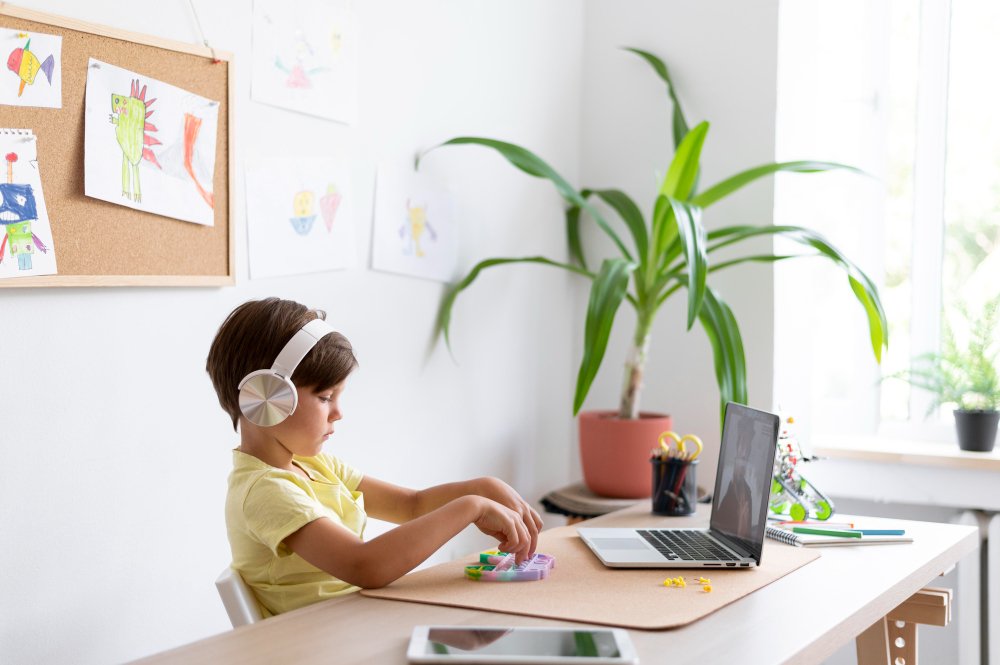
Ask yourself:
- Is there a dedicated homework zone?
- Is the lighting adjustable and soft?
- Is background noise controlled?
- Are tasks visually structured?
- Are movement breaks planned?
- Was the child involved in the setup?
If you answered “no” to any, change one thing this week.
Small wins build momentum.
Do These Strategies Work for Both ADHD and Autistic Children?
Yes, but for different reasons.
| Strategy | ADHD Benefit | Autism Benefit |
| Dedicated study space | Reduces distractions | Predictability lowers anxiety |
| Sensory-friendly design | Minimizes focus derailers | Prevents sensory overload |
| Visual supports | Supports working memory | Provides clarity & structure |
| Predictable routine | Builds habit loops | Reduces stress from uncertainty |
| Movement breaks | Resets attention | Regulates sensory needs |
| Personalization | Increases motivation | Accommodates sensory comfort |
ADHD support focuses on attention regulation and executive functioning.
Autism support focuses on sensory processing and predictability.
Both benefit from thoughtful design.
Final Thoughts: Start Small, Stay Flexible
When ADHD and Autism-Friendly Study Spaces are intentionally designed, homework becomes less stressful and more successful.
You don’t need a full room renovation.
Try one change:
- Add a visual checklist
- Use a 20-minute timer
- Reduce background noise
- Schedule movement breaks
Observe for a week.
Progress builds confidence for both you and your child.
For more evidence-based parenting resources, visit our homepage at NeuroNestHub:
https://neuronesthub.com/
References
Antosh, S., et al. (2024). Use of an adaptive sensory environment in patients with autism spectrum disorder: Effects on anxiety and tolerance. Journal of Autism and Developmental Disorders. (PMC article)
Kara, O. K., et al. (2021). Home participation, support and barriers among children with neurodevelopmental differences during the COVID-19 pandemic. Children, 8(8), 1–14. (PMC article)
Gollier-Briant, F., et al. (2024). Digital Homework Support Program for children and families: Feasibility and outcomes. Frontiers in Psychology. (PMC article)
Frolli, A., Cerciello, F., Esposito, C., Ricci, M. C., Laccone, R. P., & Bisogni, F. (2023). Universal Design for Learning for children with ADHD. Children, 10(8), Article 1350. https://doi.org/10.3390/children10081350
Bagheri, S., et al. (2024). Visual and acoustic discomfort: Implications for neurodiverse-friendly interior design. Environmental Design Research Journal.