

A Morning That Changed Everything
Parent-friendly daily routine ideas for children with autism are crucial, particularly because their benefits show most clearly during stressful or unexpected moments.
At 7:15 a.m., Meera stood in her kitchen holding a school bag in one hand and her phone in the other. Her 6-year-old son Aarav, who is autistic, was lying on the floor crying not because something big had happened, but because something unexpected had.
Breakfast was late. And for Aarav, late meant unsafe.
Like many parents of children with autism, Meera used to wonder why small changes led to big emotions. What she later learned, and what research now strongly confirms, is this: predictable daily routines are not about control; they are about emotional safety.
Over the last few years, multiple studies have shown that structured, visually supported routines reduce anxiety, improve adaptive behavior, and increase independence in children with autism spectrum disorder (ASD) (Hatherly et al., 2022; Thomas et al., 2022).
Why Predictable Routines Matter So Much for Autistic Children
Children with autism often experience the world as unpredictable and overwhelming. Daily routines serve as an anchor, helping individuals understand what comes next and reducing the mental load of constant uncertainty.
A large community study by Hatherly et al. (2022) found that consistent family routines acted as a protective factor for emotional well‑being and reduced behavioral challenges. Similarly, Selman (2024) demonstrated that predictable routines significantly support emotional regulation over time.
One of the most effective tools within routines is the visual schedule. According to a systematic review by Thomas et al. (2022) and a more recent review by Liang (2024), visual schedules:
- Reduce transition‑related anxiety
- Improve on‑task behavior
- Increase independence across home and school settings
👉 Parent tip: You don’t need fancy tools. Printed pictures, drawings, or even written lists can work.
Helpful external resource:
Autism Speaks – Visual Supports: https://www.autismspeaks.org/visual-supports
Parent-Friendly Daily Routine Ideas for Children with Autism: Morning Strategies

For Aarav, mornings used to feel chaotic. For Meera, they felt exhausting. But once she introduced a simple visual sequence-Wake up → Brush teeth → Get dressed → Breakfast, everything slowly changed.
Research backs this up. Thomas et al. (2022) found that visual activity schedules significantly improve compliance and reduce problem behaviors during daily transitions.
Evidence‑Based Morning Strategies
Use a visual routine chart placed at eye level
Provide clear, advance time reminders (“5 minutes before we leave”)
Offer limited choices (two outfits, two breakfast options)
Use timers or countdowns for transitions
These strategies align with Naturalistic Developmental Behavioral Interventions (NDBIs), which focus on teaching skills within everyday routines (Conrad et al., 2021).
School and Learning Time: Structure with Sensory Balance

Whether learning occurs at school or at home, structure matters, but so does flexibility.
A review by Liang (2024) found that structured visual schedules during learning hours improve attention and academic engagement in children with autism. Importantly, planned sensory breaks were key to sustaining focus.
Practical Learning‑Time Supports
- Visual schedules with clear time blocks
- Movement or sensory breaks every 20–40 minutes
- Breaking tasks into small steps (task analysis)
- Consistent positive reinforcement
Recent parent‑coaching research shows that when parents embed learning into daily routines, children demonstrate stronger adaptive skills (Cullenward et al., 2024).
After‑School Routines: Unwinding Without Losing Structure
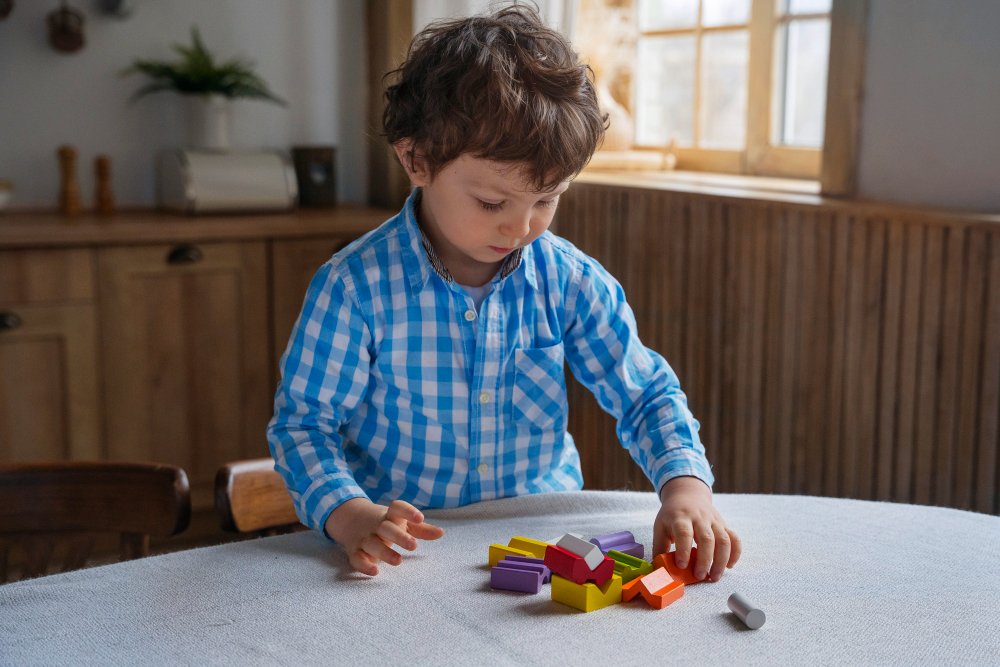
After school, Aarav didn’t need more demands, he needed predictability.
Research highlights that embedding learning into play, chores, and everyday interactions strengthens adaptive functioning (Cullenward et al., 2024).
Sample After‑School Flow
Snack → Quiet play → Homework → Therapy/play → Family time
Tools like token boards or reward charts can support motivation while keeping expectations clear.
Evening and Mealtime Routines: Creating Calm Connections

Mealtimes can be overwhelming due to sensory sensitivities. Studies suggest that consistent setup and reduced sensory input improve participation and reduce stress.
Helpful Mealtime Strategies
- Same seating and utensils daily
- Visual mealtime cues (“First vegetables, then rice”)
- Small structured choices (plate or spoon color)
- Reduced noise and softer lighting
“Evening transitions can be challenging, but parent-friendly daily routine ideas for children with autism ensure mealtimes are calm, predictable, and sensory-friendly.”
Bedtime Routines: Supporting Better Sleep
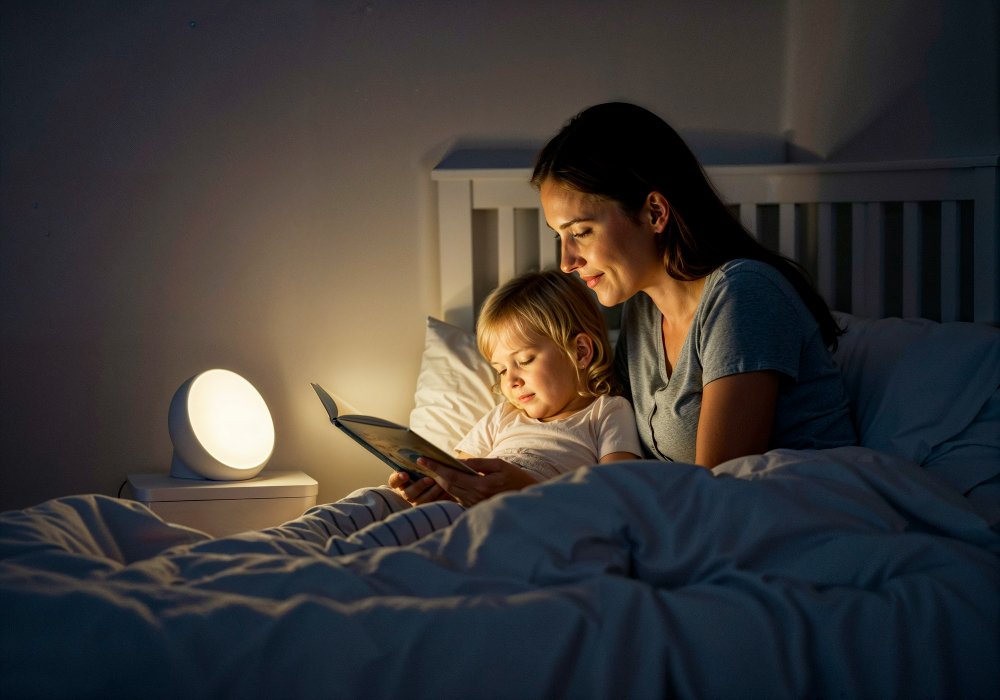
Sleep challenges are common in children with autism, but structured bedtime routines work.
A randomized controlled trial by Pattison et al. (2022) found that consistent bedtime routines combined with behavioral strategies significantly improved sleep onset and duration. Additionally, Schroder (2021) highlighted the role of prolonged‑release melatonin under medical supervision when behavioral approaches alone are insufficient.
“Following parent-friendly daily routine ideas for children with autism, a consistent wind-down sequence improves sleep and emotional regulation.”
Evidence‑Based Bedtime Routine
- Begin wind‑down 45–60 minutes before sleep
- Follow the same sequence nightly (Bath → Pajamas → Story → Lights off)
- Reduce screens and bright lights
- Use calming sensory supports (white noise, deep‑pressure blankets)
Helpful resource:
National Autistic Society – Sleep: https://www.autism.org.uk/advice-and-guidance/topics/physical-health/sleep
A Sample Daily Routine (Flexible Guide)
| Time | Activity | Support Strategy |
| 7:00 a.m. | Wake up & hygiene | Visual morning schedule |
| 8:00 a.m. | Breakfast & travel | Countdown timer |
| 9:00 a.m.–3:00 p.m. | School/therapy | Visual schedule & sensory breaks |
| 3:30 p.m. | Snack & rest | Predictable order |
| 4:30 p.m. | Homework/skills | Task analysis & reinforcement |
| 5:30 p.m. | Play | Sensory‑friendly setup |
| 7:30 p.m. | Family dinner | Visual mealtime guide |
| 8:30 p.m. | Bedtime routine | Structured wind‑down |
Note: This is a reference framework, not a rigid rule. Always adapt routines to your child’s unique needs. Also, the names used in this article are fictional and used only for illustrative purposes.
Final Thoughts for Parents
Routines are not about perfection.
They are about predictability, emotional safety, and trust.
As Meera learned over time, once Aarav knew what to expect, he no longer needed to fight the day. Instead, he could move through it-one calm transition at a time.
By combining research‑based strategies, visual supports, and compassionate flexibility, families can turn everyday routines into powerful tools for growth, regulation, and independence.
For more articles and upcoming resources, visit our homepage https://neuronesthub.com/ at NeuroNestHub.
References
Conrad, C. E., et al. (2021). Parent‑mediated interventions for children and adolescents with autism spectrum disorder: A systematic review and meta‑analysis. Frontiers in Psychiatry. https://doi.org/10.3389/fpsyt.2021.773604
Cullenward, J., et al. (2024). Characteristics of effective parent‑mediated interventions for children with autism: A systematic review. Frontiers in Psychology.
Hatherly, K., et al. (2022). Routines as a protective factor for emerging mental health in children: A community sample. Frontiers in Psychology.
Liang, Z. (2024). The use of visual schedules to increase academic‑related on‑task behaviours for children with autism: A literature review. International Journal of Developmental Disabilities.
Pattison, E., et al. (2022). Randomized controlled trial of a behavioral sleep intervention for autistic children (Sleeping Sound RCT). Journal of Autism and Developmental Disorders. https://pmc.ncbi.nlm.nih.gov/articles/PMC9684935/
Schroder, C. M. (2021). Pediatric prolonged‑release melatonin for insomnia in children and adolescents with autism spectrum disorder. Expert Review of Neurotherapeutics, 21(10), 1087–1096.
Selman, L. (2024). Daily routines and emotional regulation in children with autism spectrum disorder: A longitudinal study. Child Development Research, 2024, 1–10.
Thomas, N., et al. (2022). The efficacy of visual activity schedules in children with neurodevelopmental conditions: A systematic review. Journal of Autism and Developmental Disorders.