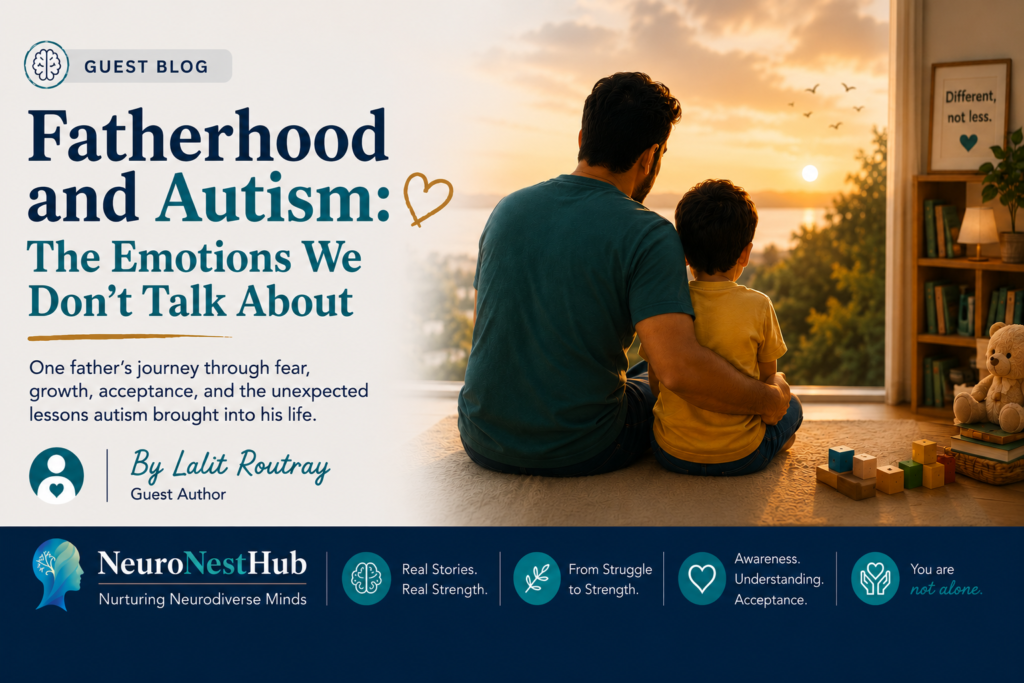
Fatherhood and Autism often look very different from the journey many parents imagine. Becoming a parent comes with hopes, dreams, and expectations about the future. But for many families raising autistic children, the journey unfolds differently than expected. In this guest blog, Lalit Routray shares his personal experience of fatherhood, autism, and the emotions many fathers carry silently as they learn to navigate an unexpected path.
About the Guest Author
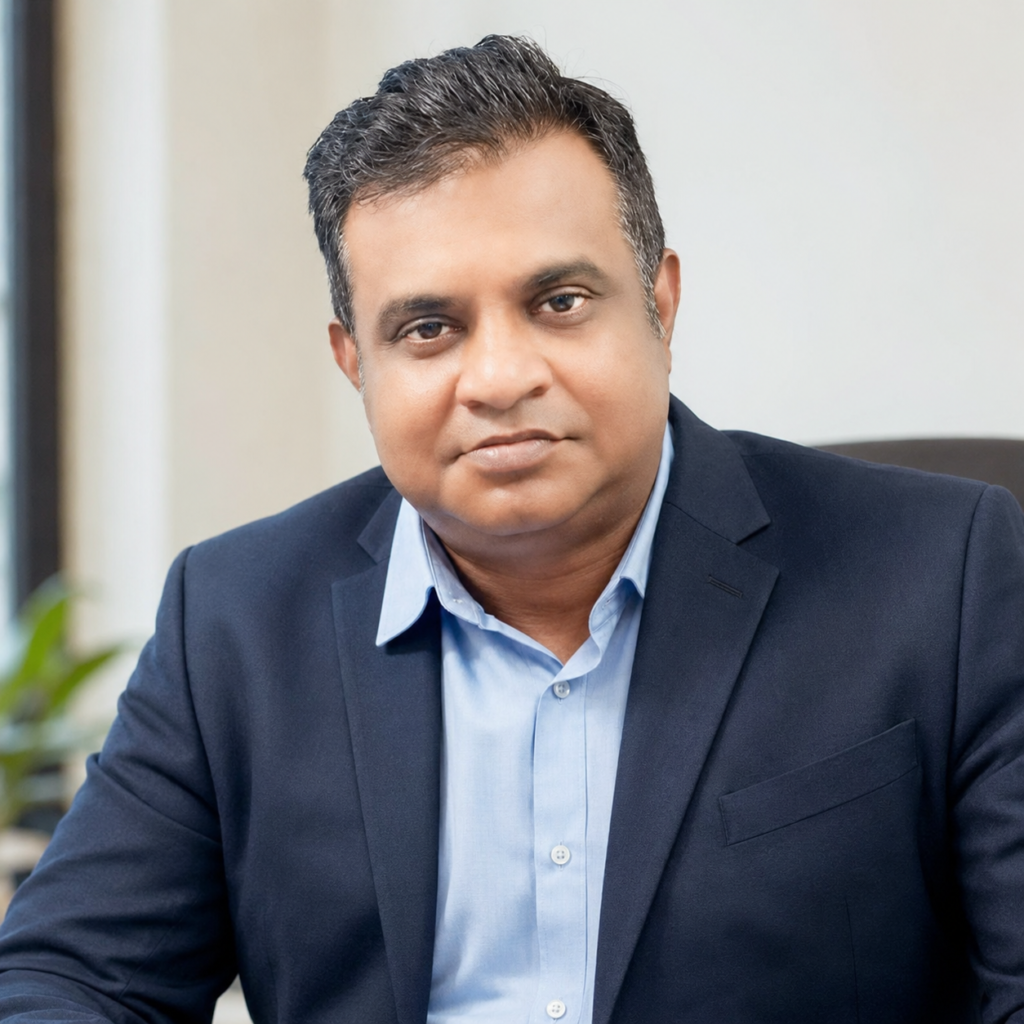
Lalit Routray is based in India and is a proud father of a neurodivergent child. He is the health-tech startup founder of GodsOwnChild, focused on transforming support for the autism and neurodiverse community. With nearly 18 years of leadership experience across leading organisations, he combines business expertise with a deeply personal mission inspired by his own parenting journey. Through technology, community building, specialised products, and innovative services, Lalit is working to create a more inclusive ecosystem that empowers neurodiverse individuals and helps families navigate their developmental journey with confidence and hope.
Guest Blog by Lalit
I became a father with the same dreams most fathers have.
I imagined teaching my son how to ride a bicycle, helping him with homework, watching him make friends, and seeing him grow into an independent young man. Like many parents, I had a picture in my mind of how life would unfold.
Life, however, had a different plan for us.
Fatherhood and Autism: When Life Doesn’t Follow the Plan
When our son Reyansh was young, we started noticing that some milestones were not coming as expected. His speech was delayed. His responses were different from other children his age.
At first, we convinced ourselves that every child develops differently and that he would catch up with time.
But somewhere deep inside, we knew something was not quite right.
When Reyansh was diagnosed with Autism Spectrum Disorder at the age of three, it felt as though the ground beneath us had shifted.
The diagnosis brought uncertainty, fear, and countless questions about the future. At the same time, it also brought clarity.
We finally knew what we were dealing with.
The Silent Fears Fathers Often Carry
As fathers, we are often expected to be the strong ones.
People expect us to stay composed, handle finances, make decisions, and reassure everyone around us that things will be fine. While mothers are often encouraged to express their emotions, fathers are often expected to carry theirs quietly.
I was no different.
There were days when I felt confused. Days when I worried about what the future would look like for my son. Days when I wondered whether I was doing enough as a parent.
I had questions that seemed impossible to answer.
- Would he be able to communicate effectively?
- Would he make friends?
- Would he be accepted by society?
- What would happen when we were no longer around?
These were fears I rarely spoke about openly.
Like many fathers, I carried them silently.
“As fathers, we are often expected to be the strong ones. While mothers are encouraged to express their emotions, fathers are often expected to carry theirs quietly.”
The journey that followed was not easy. It involved learning about an entirely new world of therapies, interventions, special education, and support systems.
Every small improvement became a milestone worth celebrating.
Every setback became a lesson in patience.
Lessons About Fatherhood and Autism My Son Taught Me
But something interesting happened along the way.
The more time I spent trying to understand my son, the more I realised that autism was changing me too.
Initially, like many parents, I focused on what Reyansh struggled with.
Over time, I began to notice something far more important: his strengths.
- His ability to show pure empathy
- His unwavering determination
- His unique way of looking at the world
- His ability to experience joy without filters
- His capacity to form deep emotional connections despite having limited words
As I learned to see the world through his eyes, my understanding of success, communication, and connection began to change.
When Love Finds Its Own Language
One incident remains deeply etched in my memory.
One of our long-associated house helps, who had developed a strong bond with Reyansh, had to leave and return to his village due to personal circumstances.
Years later, he made a surprise visit on Reyansh’s birthday.
What followed was a powerful reminder of the depth of my son’s emotions.
Reyansh hugged him tightly and refused to let go.
Despite his communication challenges, he expressed exactly what he felt.
He wanted him to stay.
He wanted him close.
In that moment, I realised that communication is much bigger than words.
Love, attachment, empathy, and human connection often find their own language.
As fathers, we spend a lot of time trying to teach our children.
Yet some of the most important lessons of my life have come from my son.
He taught me patience.
He taught me empathy.
He taught me to celebrate progress instead of perfection.
Most importantly, he taught me that every individual deserves to be valued for who they are, not judged for what they cannot do.
“Communication is much bigger than words. Love, attachment, empathy, and human connection often find their own language.”
Building Purpose Through Lived Experience
Over the years, this journey became bigger than our family.
My wife and I met countless other parents facing similar challenges. We saw families struggling to access information, services, products, and support. We met extraordinary professionals dedicating their lives to helping children. We discovered a community full of strength, resilience, and compassion, yet often disconnected from one another.
That realisation eventually led us to build GodsOwnChild, an initiative born not from a business idea but from lived experience.
It was our way of contributing to a cause that had already transformed our lives.
Today, when I look back, I no longer define strength the way I once did.
Strength is not pretending everything is fine.
Strength is not suppressing emotions.
Strength is showing up every day.
Strength is attending one more therapy session when you are exhausted.
Strength is advocating for your child when nobody else understands.
Strength is learning, adapting, and continuing to move forward despite uncertainty.
And strength is allowing yourself to feel.
A Message to Other Fathers
If there is one message I would like to share with other fathers walking a similar path, it is this:
You do not have to carry everything alone.
It is okay to be scared.
It is okay to feel overwhelmed.
It is okay to admit that some days are harder than others.
But never underestimate the impact your presence can have on your child.
For every child, their father is often their first superhero.
Children with autism are no different.
They may not always express it in conventional ways, but they need us just as much.
They need us to be their advocates, protectors, role models, and champions.
Autism was not a journey I had planned for.
But it is undoubtedly making me a better father, a better human being, and a better student of life.
And for that, I will always be grateful to my son.
“Autism was not a journey I had planned for, but it has become one of my greatest teachers.“
Connect With The Guest Author
Connect With The Author
To connect with Lalit Routray and learn more about his work in the neurodiversity and autism space, visit the GodsOwnChild website and connect with him on LinkedIn. Through his work, Lalit is helping build innovative solutions, supportive communities, and practical resources that empower neurodiverse individuals and their families.
This article was contributed to NeuroNestHub as part of our Community Voices and Guest Contributor Initiative, where lived experiences, professional insights, and diverse perspectives come together to foster awareness, empathy, and meaningful conversations around neurodiversity, mental health, inclusion, and family support.
Discover real stories, practical resources, and a growing community at NeuroNestHub. If you have a story, insight, or experience to share, we’d love to hear from you: https://neuronesthub.com/
Disclaimer: This guest blog reflects personal lived experience and perspectives shared for awareness and educational purposes.