
When Acceptance Changes the Parenting Journey
Parenting a neurodivergent child can bring moments of uncertainty, questions, and emotions that are difficult to put into words. An AuDHD journey is not simply about understanding autism and ADHD; it is also about learning to see a child beyond diagnoses, recognising their strengths, understanding their needs, and creating an environment where they can feel accepted and supported.
For many parents, the journey can involve navigating therapy, education, social expectations, advocacy, and the pressure to find the “right” path for their child. But with understanding comes a shift from comparison to acceptance, from uncertainty to confidence, and from simply seeking support to becoming an advocate for your child.
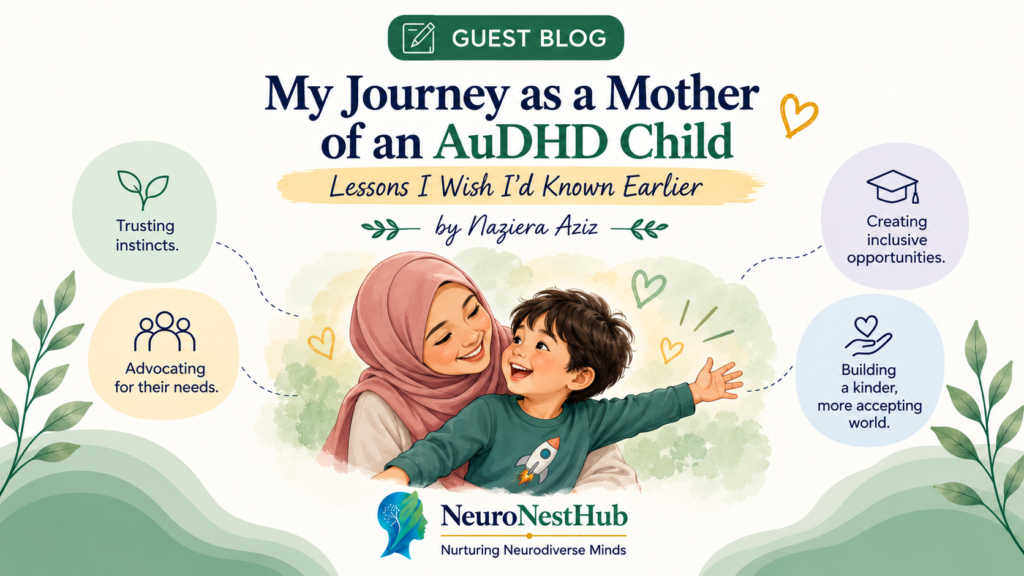
In this guest blog, Naziera Aziz shares her personal journey as a mother raising an AuDHD child in Malaysia. Drawing from her experiences as a mother, autism advocate, and neurodiversity researcher, Naziera reflects on the lessons motherhood has taught her, the importance of autism acceptance, the challenges of inclusive education, and why supporting neurodivergent families should begin with understanding rather than comparison.
About the Guest Author
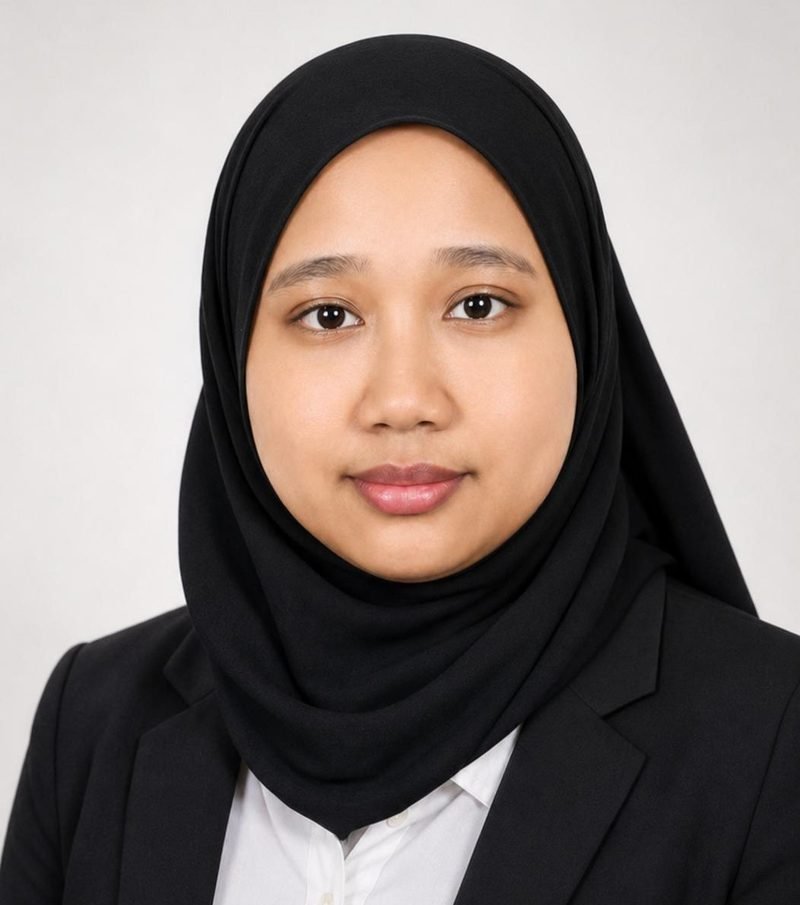
Naziera Aziz is a Malaysian autism advocate, neurodiversity researcher, and mother of an AuDHD child, with a partner who has ADHD. Her family’s lived experience has shaped her mission to bridge research with real-life parenting, making autism and ADHD more understood and accepted in Malaysia.
She is currently pursuing a Master’s degree and preparing for a PhD in neurodiversity, focusing on supporting neurodivergent children and their families.
Through her writing and advocacy, Naziera hopes to empower parents to trust their instincts and embrace every child’s unique journey.
Lessons I Wish I’d Known Earlier
I first realised something was different about my son when he was just four months old. After years of caring for my nephews and nieces, I noticed his development didn’t quite resemble that of other babies.
He was unusually calm. Even when he fell or had a fever, he rarely cried and was never a fussy baby. As he grew older, the differences became clearer. He avoided eye contact, was constantly on the move, and his speech was significantly delayed.
People around me often said, “He’s normal. Boys usually talk late.” For a while, I questioned my own instincts. But deep down, I knew my son needed support, not reassurance that everything would eventually fall into place.
That was the moment my life changed. I left my career to become his full-time caregiver and began learning everything I could about autism, ADHD, and early intervention.
Looking back, the greatest lesson I’ve learned is simple: trust your instincts and don’t be afraid to advocate for your child. Parents are often the first to notice when something is different.
What Autism Acceptance Looks Like Beyond Awareness
To me, acceptance goes far beyond recognising the word autism. It means embracing my son exactly as he is, rather than expecting him to behave like everyone else.
Today, he is the opposite of the quiet little boy people once worried about. He loves talking, enjoys meeting new people, and is incredibly friendly. He’ll happily start a conversation with almost anyone.
While some people describe him as “too friendly,” I see it as one of his greatest strengths.
One thing that surprises many people is that he speaks only English, even though almost everyone around us speaks Malay. Instead of questioning why he is different, true acceptance means communicating with him in the language he is comfortable with and appreciating the unique way he connects with the world.
Real acceptance is creating spaces where autistic children are understood, included, and celebrated for who they are.
The Emotional Journey of Parenting an AuDHD Child
Parenting an AuDHD child has been a journey of unconditional love, resilience, and sacrifice. Every major decision my husband and I made was centred around one priority: our son’s therapy and future.
When finances became difficult, we sold our car, all of my branded handbags, and even my favourite cookware. We moved into a smaller home so we could continue paying for therapy without interruption.
It wasn’t an easy decision, but it was never a difficult choice. Our son always came first.
Despite every challenge, we have never missed a single therapy session. Consistency became our promise to him.
Looking back, I don’t remember the things we sold. I remember the milestones he achieved because we chose to invest in his future.
Inclusive Education: What Every Parent Wishes Schools Understood
My son studies in a mainstream classroom, not an inclusive education programme. He is the only autistic child in his class.
My hope is that every school, whether public or private, will provide sufficient classrooms, trained teachers, and meaningful support for children with special educational needs.
Inclusion should never depend on a family’s income or postcode. Every child deserves the opportunity to learn in an environment where they feel safe, understood, and valued.
Raising an AuDHD Child in Malaysia: Challenges, Growth and Hope
Raising an AuDHD child in Malaysia has taught me that awareness and acceptance are not always the same.
One of the hardest realities is seeing autistic children blamed whenever an incident happens, often before anyone takes the time to understand the situation. Many autistic children struggle to explain what happened or defend themselves, which makes them especially vulnerable to misunderstanding.
Another challenge is access to therapy. Private intervention is costly, while government services often come with long waiting lists. Families are frequently forced to choose between financial stability and giving their child the early support they desperately need.
My hope is for a Malaysia where autistic children are treated with fairness, compassion, and dignity, and where quality therapy and education are accessible to every family, regardless of their financial circumstances.
How Parents Can Become Strong Advocates for Their Neurodivergent Children
Advocacy begins with believing your child.
Parents should trust their instincts, continue learning about autism and ADHD, and never be afraid to ask questions or speak up. Our children may not always be able to express their needs, so sometimes we have to become their voice.
I also believe social media is a powerful platform for change. I regularly share educational content and my personal experiences because one honest story can reach thousands of people.
If it helps another parent recognise early signs, reduces stigma, or encourages someone to show kindness to an autistic child, then it is worth sharing.
Sometimes advocacy starts with something as simple as telling the truth about our journey.
Balancing Research, Advocacy and Motherhood: My Journey in Neurodiversity
Motherhood is the heart of everything I do. It is the reason I chose to pursue research in neurodiversity and the reason I continue advocating for autistic children and their families.
My son has been my greatest teacher. His journey has shown me that lived experience is just as valuable as academic knowledge.
Through research, I hope to contribute evidence that improves support systems. Through advocacy, I hope to make families feel seen, heard, and less alone.
Balancing therapy appointments, family life, research, and social media is exhausting at times, but every step forward my son takes reminds me why this work matters.
Supporting Families Through Acceptance Rather Than Comparison
Comparison is one of the greatest burdens families of neurodivergent children carry.
Children should never be measured against their siblings, cousins, or classmates because every child develops on their own timeline. A milestone achieved later is still a milestone worth celebrating.
When we replace comparison with acceptance, we permit families to breathe.
We celebrate progress instead of perfection, choose encouragement over judgement, and create a community where every neurodivergent child is valued for their own unique journey.
Connect with the Guest Author
If Naziera’s story and insights resonated with you, you can learn more about her work and connect with her on Facebook, TikTok, and LinkedIn.
This article was contributed to NeuroNestHub as part of our community voices and guest contributor initiative, where lived experiences, professional insights, and diverse perspectives come together to foster awareness, empathy, and meaningful conversations around neurodiversity, mental health, and inclusive leadership.
Discover real stories, practical resources, and a growing community at NeuroNestHub. If you have a story to share, we’d love to hear from you: https://neuronesthub.com/