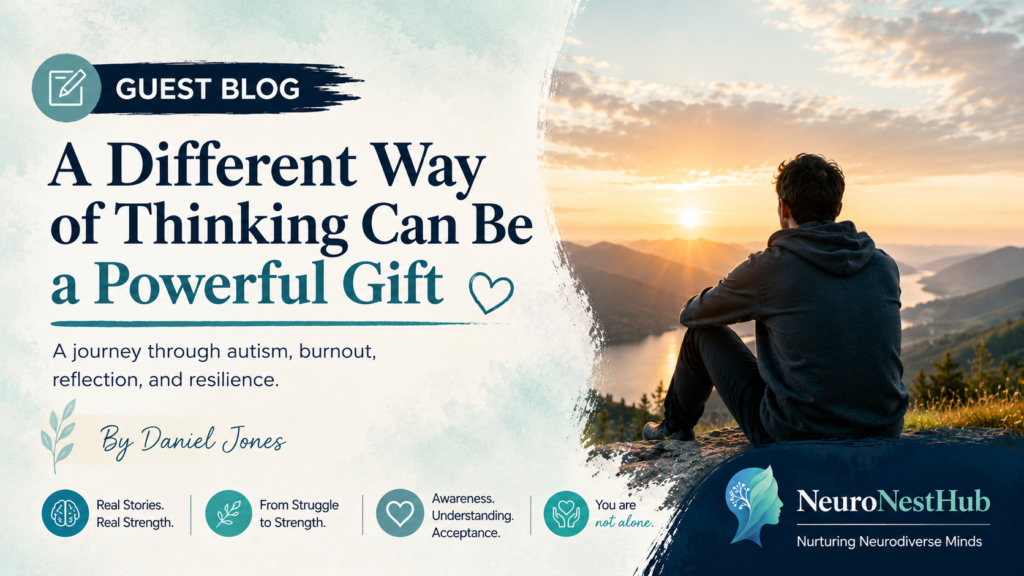
Living with autism and neurodivergence often means experiencing the world differently. In this heartfelt guest blog, Daniel Jones shares his personal journey with autism, burnout, mental health challenges, deep reflection, and resilience. Through lived experience, he explores how neurodivergent thinking can be emotionally exhausting yet deeply meaningful while encouraging greater understanding, compassion, and acceptance for autistic individuals and neurodiverse minds.
About the Guest Author
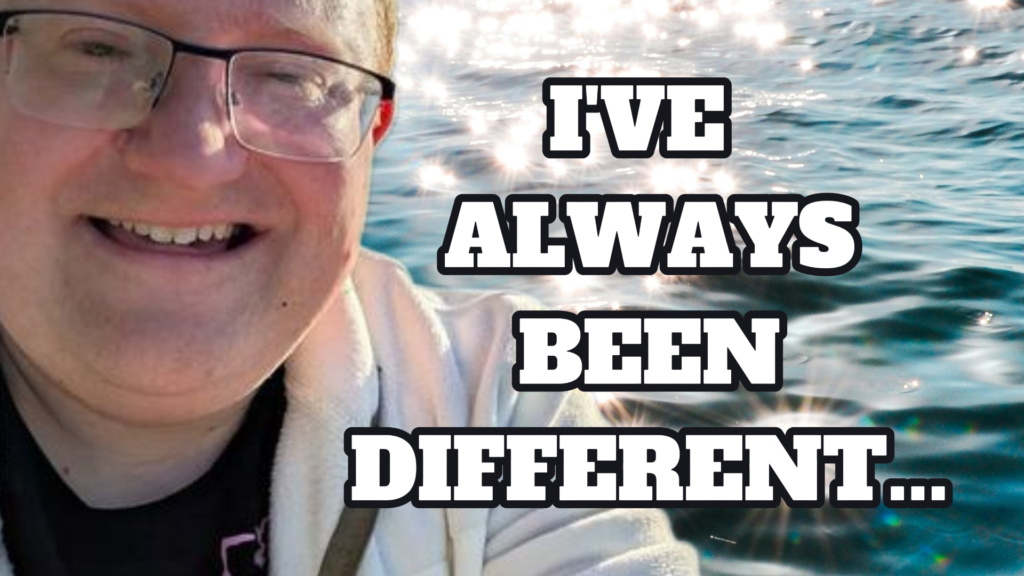
Daniel Jones is the founder of Living With Dan, a platform focused on autism, mental health, and neurodiversity awareness. Based in Banbury, England, U.K., he shares his lived experiences to encourage understanding, reduce stigma, and remind others that thinking differently can also be a source of strength.
At NeuroNestHub, we deeply appreciate Daniel Jones for courageously sharing his personal journey and perspective with our community. We are thankful for his contribution to creating greater awareness, empathy, and understanding around autism, burnout, and neurodiversity.
Guest Blog By Daniel Jones
For most of my life, I knew my brain worked differently. I noticed things deeply, reflected constantly, and often felt emotionally exhausted trying to keep up with a world that expected me to think like everyone else.
Like most people, my days may appear ordinary from the outside. I wake up, have breakfast, go to work, and unwind at the end of the day with a warm drink and a blanket. But internally, my mind processes the world in ways that are often difficult to explain.
Living with autism has shaped how I think, reflect, and experience life. At times, it has been overwhelming. But over the years, I’ve also come to realise that having a different way of thinking can be a powerful gift.
“Let me teach you what living with autism is really like.”
Living With Autism and Feeling Different
My name is Daniel, and I’m the founder of Living With Dan, a platform focused on autism and mental health awareness. Much of my journey has involved trying to prove that I am capable, despite often being misunderstood.
Growing up, I frequently felt underestimated. I was told I couldn’t do certain things or that I would struggle more than others. But deep down, I knew I was capable. I simply approached the world differently.
That is one of the reasons I created my platform: to help others realise that being neurodivergent does not make someone less valuable or less capable. In many ways, it can offer unique strengths, perspectives, and resilience.
How Deep Reflection Became a Survival Tool
One thing I’ve noticed throughout my life is how deeply I reflect on situations. When someone asks me to do something, my mind automatically analyses it from every angle. I think about the purpose behind it, the outcome, and whether it truly aligns with what matters.
For many neurodivergent individuals, thinking can feel intense and constant. Our minds rarely slow down. We often replay conversations, overanalyse situations, and search for meaning in everyday experiences.
“Ever since I was a child, I’ve had to reflect.”
For a long time, I saw this as a weakness. But over time, I came to understand that reflection was also a survival tool. It helped me adapt, learn, and grow through challenges that often felt emotionally exhausting.
That same mindset helped me write a book, run a marathon, and build a platform dedicated to helping others. It hasn’t always been easy. In fact, many days have been incredibly draining. But I’ve learned that thinking differently does not mean thinking wrongly.
Living With Autism and Neurodivergent Burnout
While a reflective, constantly active mind can be powerful, it can also become overwhelming without balance.
In 2020, after years of stress and emotional pressure, I experienced severe burnout and required mental health support during a period of psychosis recovery.
To understand how I reached that point, I have to go back several years earlier. After graduating from university, I was offered my dream job in social media. I was excited and determined to succeed, but I ignored how much pressure my mind and body were under.
I spent hours commuting every day, working long hours in front of a screen, and constantly pushing myself to achieve more. Over time, the stress quietly built up inside me.
Then the pandemic arrived.
The sudden disruption to routine, isolation, uncertainty, and constant change completely overwhelmed my nervous system. Eventually, everything became too much.
For many autistic and neurodivergent people, burnout is very real. The world often expects us to adapt constantly without recognising how mentally exhausting that process can be.
Why Neurodivergent Minds Need Compassion
Having a different way of thinking can be both a strength and a struggle.
Neurodivergent minds often notice details deeply, feel emotions intensely, and reflect in ways that many people may never fully understand. But that difference should not be viewed as something negative.
What many neurodivergent individuals truly need is understanding, compassion, and environments where they feel safe being themselves.
The more we openly talk about autism, burnout, and mental health, the more we create space for people to feel seen instead of judged.
Living With Autism: Finding Strength in Thinking Differently
For years, I believed my different way of thinking was something I needed to hide. Now, I understand it is part of who I am.
Yes, it can be exhausting at times. But it has also helped me develop resilience, empathy, creativity, and purpose.
If you are someone who feels different, misunderstood, or mentally overwhelmed, please know that your experiences matter, and your way of thinking may hold strengths you have not yet fully recognised.
Sometimes, the very things that make us feel different are also the things that make us powerful.
Connect With The Author
To connect with Daniel Jones and explore more of his work, visit Living With Dan, connect with him on LinkedIn, follow his journey on Instagram (@livingwithdann), or follow him on X (formerly Twitter) at @livingwithdann.
This article was contributed to NeuroNestHub as part of our Community Voices and Guest Contributor initiative, where lived experiences and diverse perspectives are shared to foster awareness, empathy, and meaningful conversations around mental health and neurodiversity.
Discover real stories, practical resources, and a growing community at NeuroNestHub, and if you have a story to share, we’d love to hear from you: https://neuronesthub.com/
Disclaimer
This guest blog reflects personal lived experience, individual perspectives, and awareness-based storytelling shared for educational and community support purposes only. It should not be considered a substitute for professional medical, psychological, or mental health advice, diagnosis, or treatment.